Erik van der Sluys
Beneficial Insectary

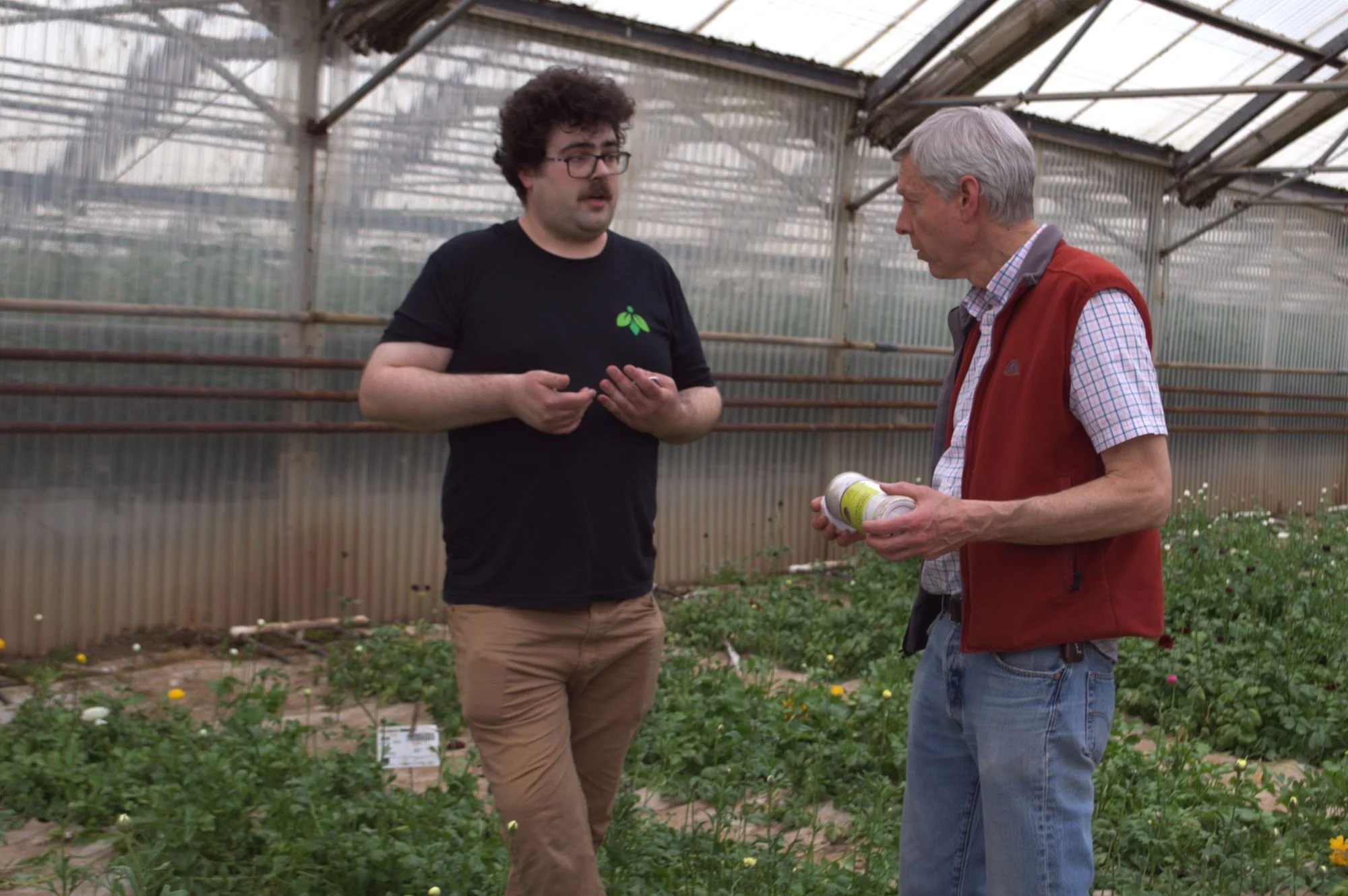
While working on a degree in Ecological Systems, Erik worked as a farm manager of a small two acre location in Seattle. After graduation, he got a job as a grower for a medicinal cannabis facility in Seattle. He then transferred to an ornamentals greenhouse in the Willamette Valley for a few years, where he gained the majority of his working knowledge using natural predators for pest management. Now working with the solutions, he provides to his clients all over the country.
For more than 30 years, Beneficial Insectary has been committed to cultivating science-based product development, procuring knowledge of least-toxic best pest management practices, and quality-driven rearing production. Providing an affordable natural balance for pest management in diversified urban settings, agriculture, and horticulture industries.
Once a tiny, family-owned farm, Beneficial Insectary started small, but is now a multinational company owned by Biobest Group and distributes all over North America.As more and more people are turning toward sustainable solutions and biological pest control methods, we have had the honor of working with some of the largest names in agriculture/horticulture to restore the balance, and start using more natural pest management products.
We still serve some of the same clients who have been with us since the start, and we enjoy repaying their loyalty by meeting more of their needs. It really is a system; they learn from us, we learn from them, and we all enjoy continuous improvement in the world of natural pest control and sustainable approaches.
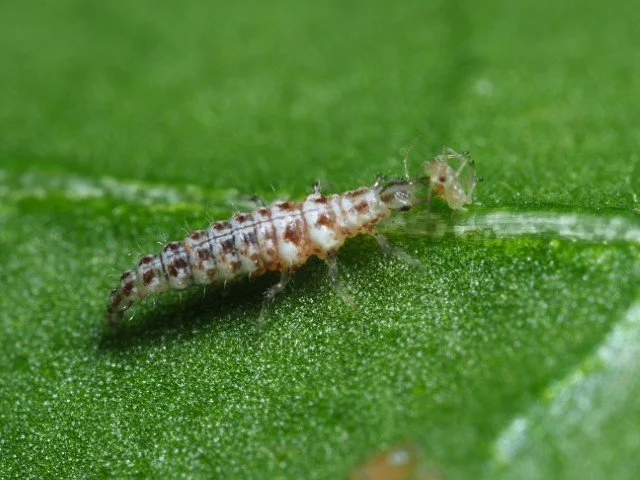
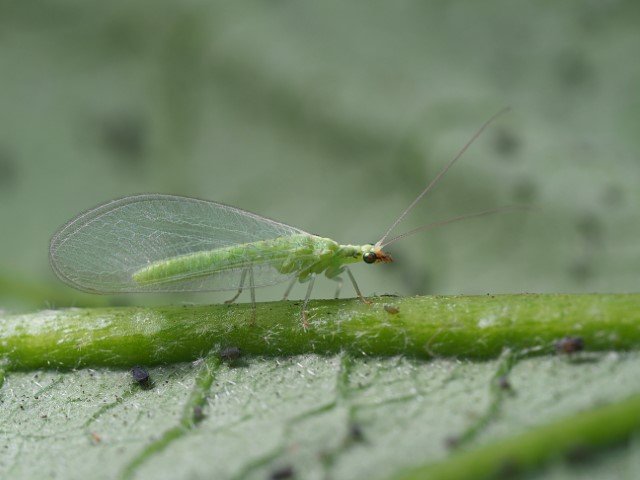
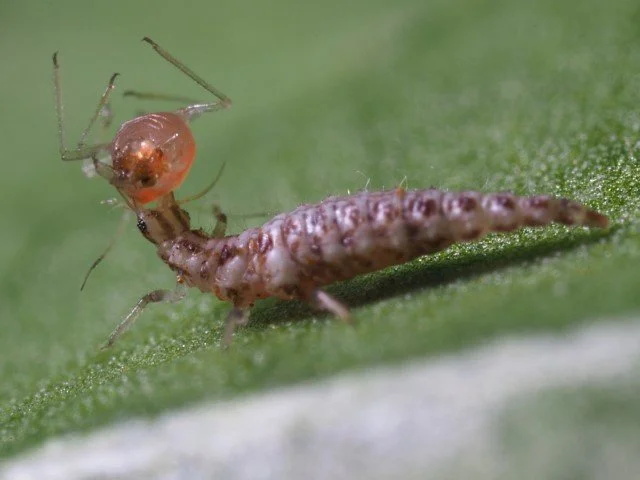

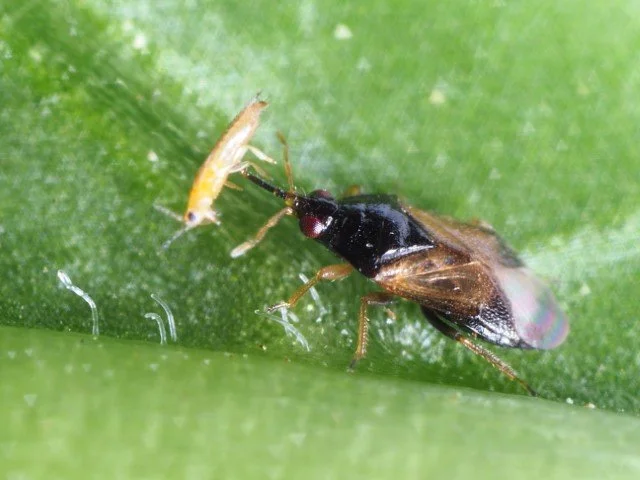
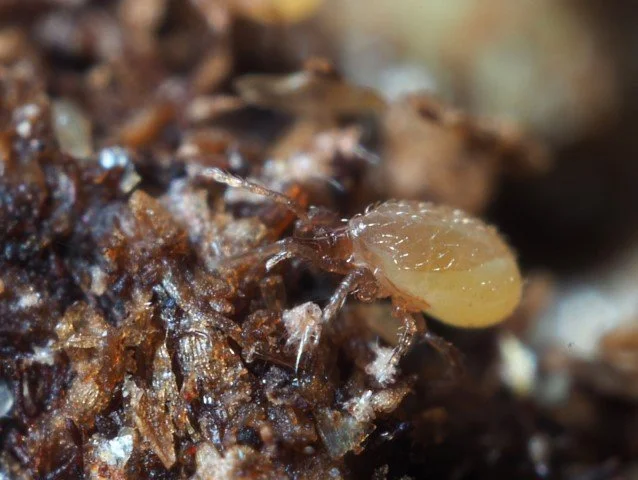
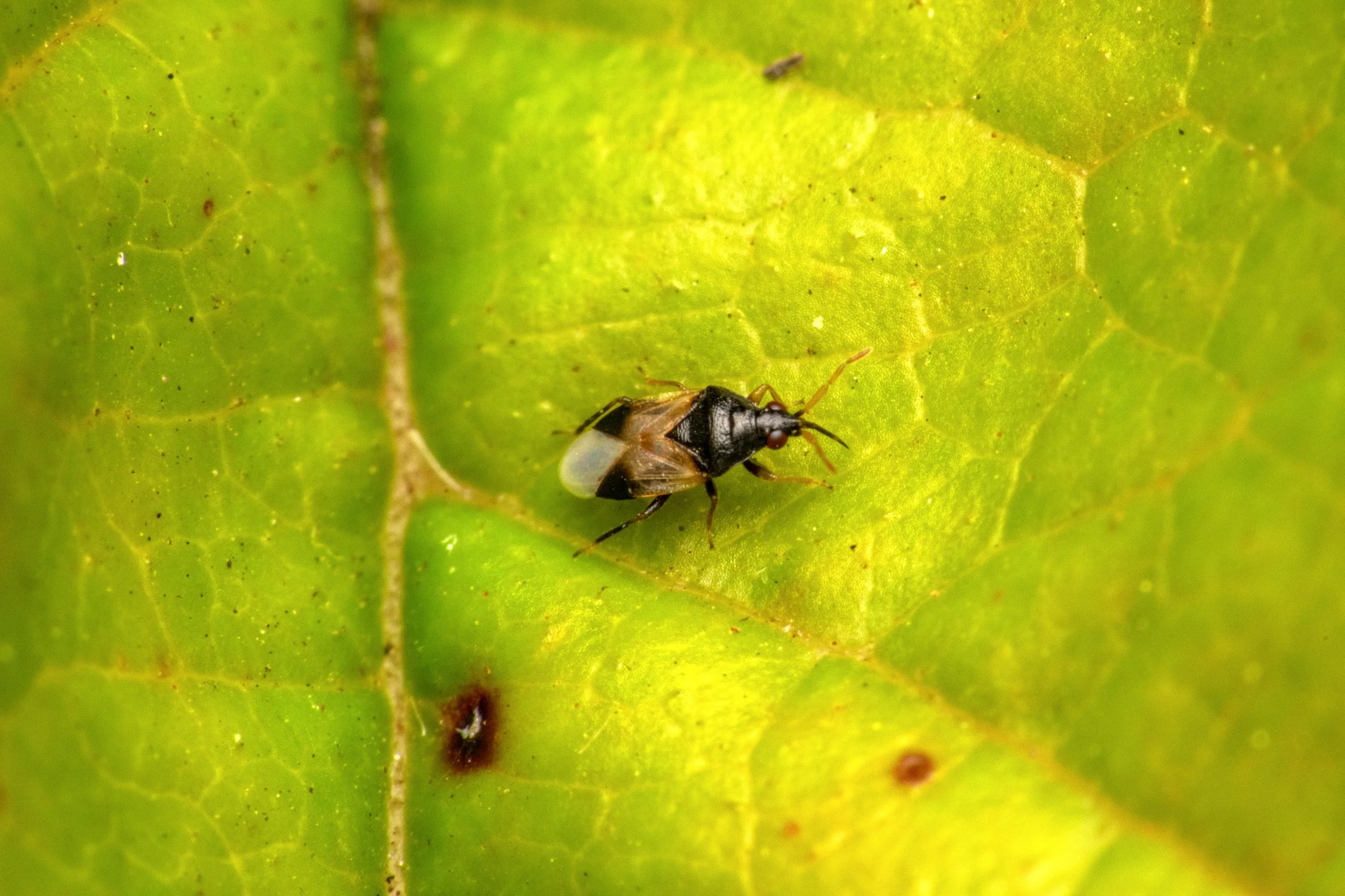

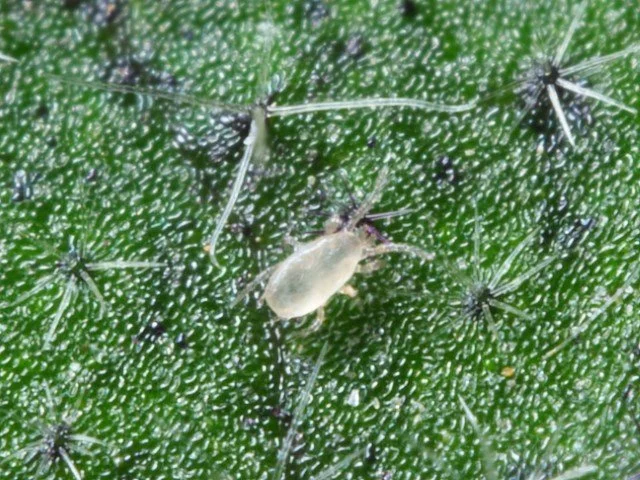
Amblyseius californicus adult
Insect control begins with 3 areas Cultural Practices, Sanitation Practices and Mechanical Practices.
Cultural Practices consists of how you take care of the growing area. For example, watering, fertilizing, harvesting, crop rotation
Sanitation Practices consists of how you keep the area clean. For example, removing dead debris, clean equipment, destroying insect and disease filled material, timely wedding
Mechanical Practices consist of mowing, For example, install insect screens, sticky cards, use water to knock bugs off, removing bad egg clusters by hand
Be sure to maintain walking or driving spaces. Keeping these areas cut will help with pollen control within the habitat.
Create boarders near woods or neighbors to help attract beneficial insects, keeping it approximately 50 yards from your growing area.
Watch temperatures for insect activity. You know as things warm up insect activity will also increase.
Netting can help, but may also provide insects with an easier highway to move between other plants.
Don’t expect the same but activity year after year. Things change and you have to read the signs and anticipate the changes in insect activity.
Identifying the bad bugs will help you know what good bugs you need to introduce to your plants.
Think like a bug!!

Quisque iaculis facilisis lacinia. Mauris euismod pellentesque tellus sit amet mollis.